Detailed · Deep study
1The turning effect on a coil
When a current flows in a rectangular coil in a magnetic field, the current is in opposite directions in the two sides at right angles to the field, so the forces on them are in opposite directions. Together they produce a turning effect (moment) on the coil.
- the number of turns on the coil
- the current
- the strength of the magnetic field
Increasing any of these increases the turning effect (and so the speed of the motor).
2How the motor keeps turning (Supplement)
- The coil turns until it is vertical (perpendicular to the field); its momentum carries it past this position.
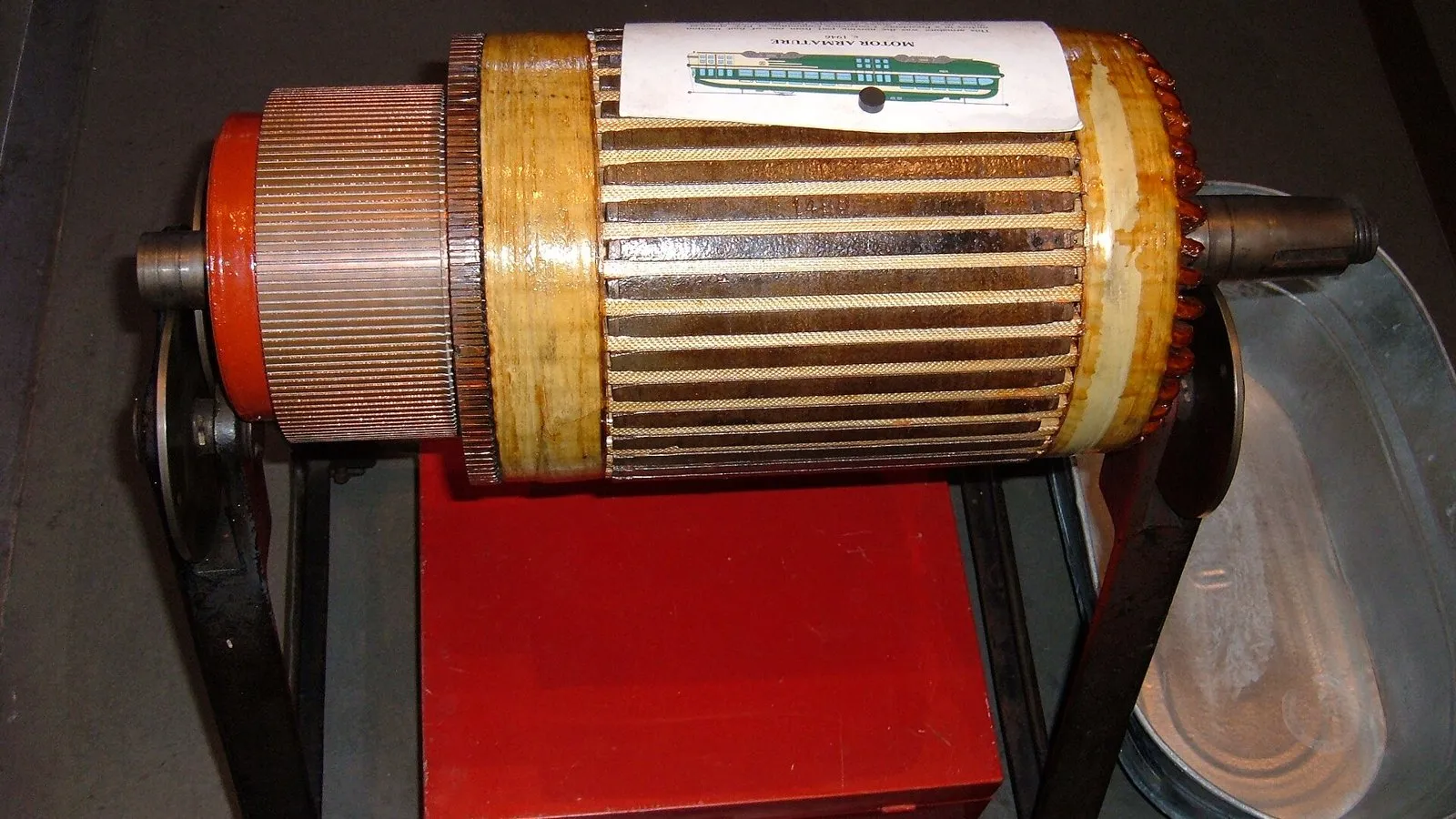
- At that moment the split-ring commutator swaps the connections, reversing the current in the coil.
- The forces now push the coil round in the same direction again, so it keeps rotating.
- Brushes (carbon) press against the commutator and carry current in and out while it rotates.
3Exam focus
Key words: turning effect; more turns, larger current, stronger field; split-ring commutator reverses the current every half turn; brushes.
Quick self-check
Answer in your head first, then reveal.
More turns on the coil (1); larger current (1); stronger magnet (1).
Reverses the current in the coil every half turn (1); so the coil keeps turning in the same direction (1).