Detailed · Deep study
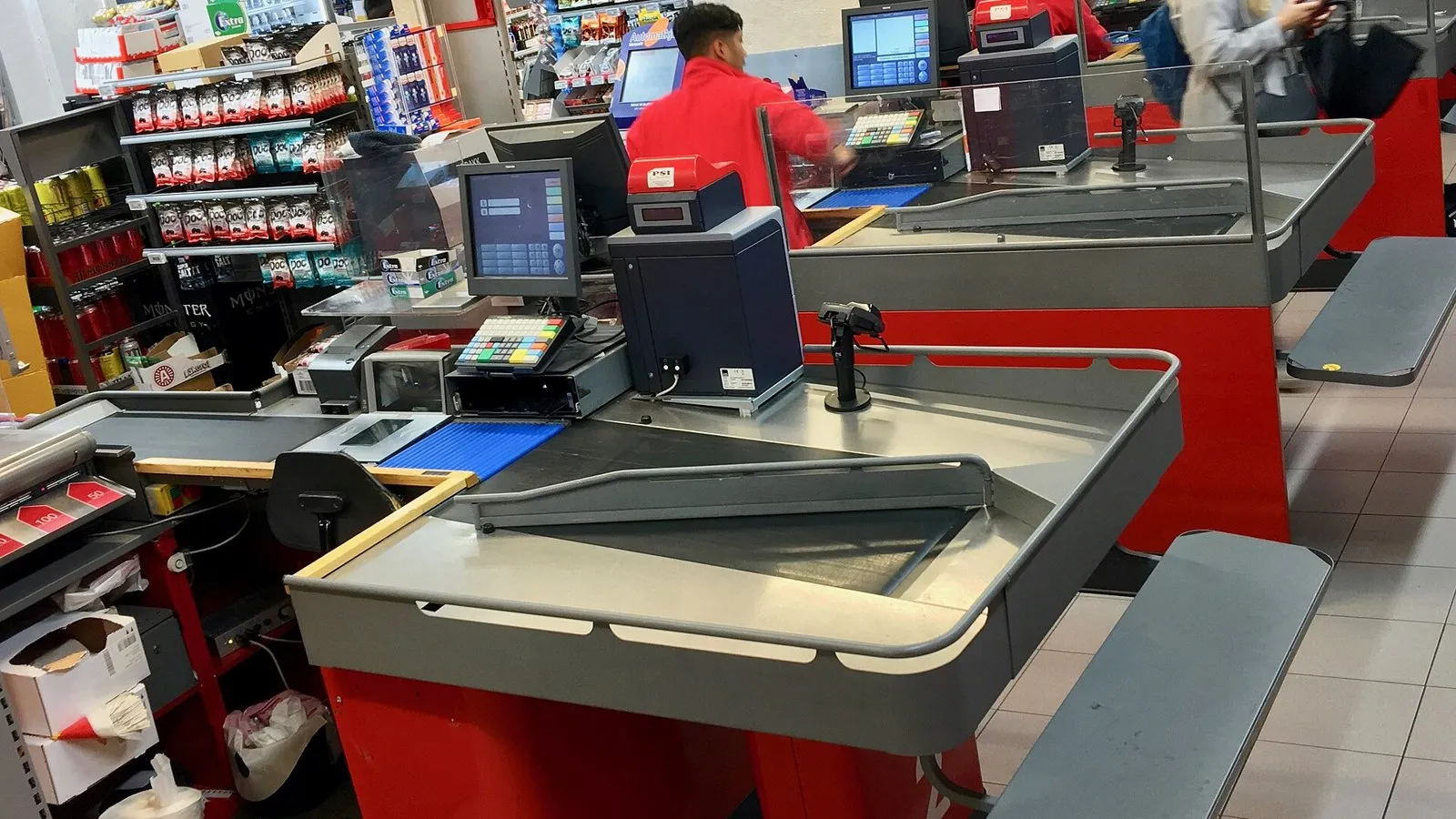
1Point of sale (POS) terminals
- The barcode on each item is scanned.
- The product code is looked up in the stock database to find the description and price, which are shown and added to the bill.
- The number in stock is reduced by one (stock file updated automatically).
- If the stock falls below the re-order level, an order is sent automatically to the supplier (ordering new stock automatically).
- When new stock arrives, the stock level is increased.
2EFTPOS terminals
- Checking the validity of cards: the bank checks the card is genuine, in date and not reported stolen, and that there are enough funds.
- Chip and PIN: the chip is read and the customer enters a PIN to confirm.
- Contactless cards: the card is held near the reader (RFID/NFC); no PIN is needed for small amounts.
- NFC payment: a smartphone or watch with a stored card is held near the reader; the phone's own security (fingerprint/face) confirms it.
- Communication: the supermarket computer sends the card and payment details to the bank computer, which authorises or declines the payment and transfers the money.
3Internet shopping
| Advantages | Disadvantages |
|---|---|
| shop 24/7 from home; saves travel time and costs | cannot see or try items before buying |
| wider choice; easy to compare prices; reviews | delivery costs and delays; parcels may be lost |
| goods delivered to the door – helps people with disabilities | risk of fraud and fake websites; card details could be stolen |
| for retailers: no shop costs, worldwide customers | less social interaction; local shops may close (job losses) |
4Exam focus
Key words: POS; barcode; stock file; re-order level; EFTPOS; chip and PIN; contactless; NFC; internet shopping.
Quick self-check
Answer in your head first, then reveal.
Barcode scanned (1); product found in the stock file (1); stock level reduced by 1 (1); if below re-order level, new stock ordered automatically (1).
Any two: cannot see items; delivery cost/delay; fraud risk (2).