Detailed · Deep study
1What density means
mass per unit volume
Density tells you how tightly mass is packed into a space. Units: kg/m³ or g/cm³. To convert g/cm³ to kg/m³, multiply by 1000.
| Substance | Density / g/cm³ | Density / kg/m³ |
|---|---|---|
| air | 0.0012 | 1.2 |
| oil | 0.92 | 920 |
| ice | 0.92 | 920 |
| water | 1.00 | 1000 |
| aluminium | 2.7 | 2700 |
| iron | 7.9 | 7900 |
| lead | 11.3 | 11 300 |
Worked example
Calculating density
A block of metal has a mass of 54 g and measures 5.0 cm × 4.0 cm × 1.0 cm. Find its density and identify the metal.
- 1
Volume of the block.
- 2
Density.
- 3
Compare with the table.
2.7 g/cm³ matches aluminium
Answer2.7 g/cm³ (2700 kg/m³): aluminium
2Measuring density
| Sample | Mass | Volume |
|---|---|---|
| liquid | mass of empty measuring cylinder, then with liquid; subtract | read the measuring cylinder |
| regularly shaped solid | balance | measure the sides with a ruler; e.g. cuboid V = length × width × height |
| irregularly shaped solid (sinks) | balance | displacement: rise in water level in a measuring cylinder, or overflow from a displacement can |
Worked example
Density of a liquid
An empty measuring cylinder has a mass of 120 g. With 50 cm³ of a liquid it has a mass of 160 g. Calculate the density of the liquid.
- 1
Mass of liquid.
- 2
Density.
Answer0.80 g/cm³
3Floating and sinking
- An object floats in a liquid if its density is less than the density of the liquid.
- It sinks if its density is greater.
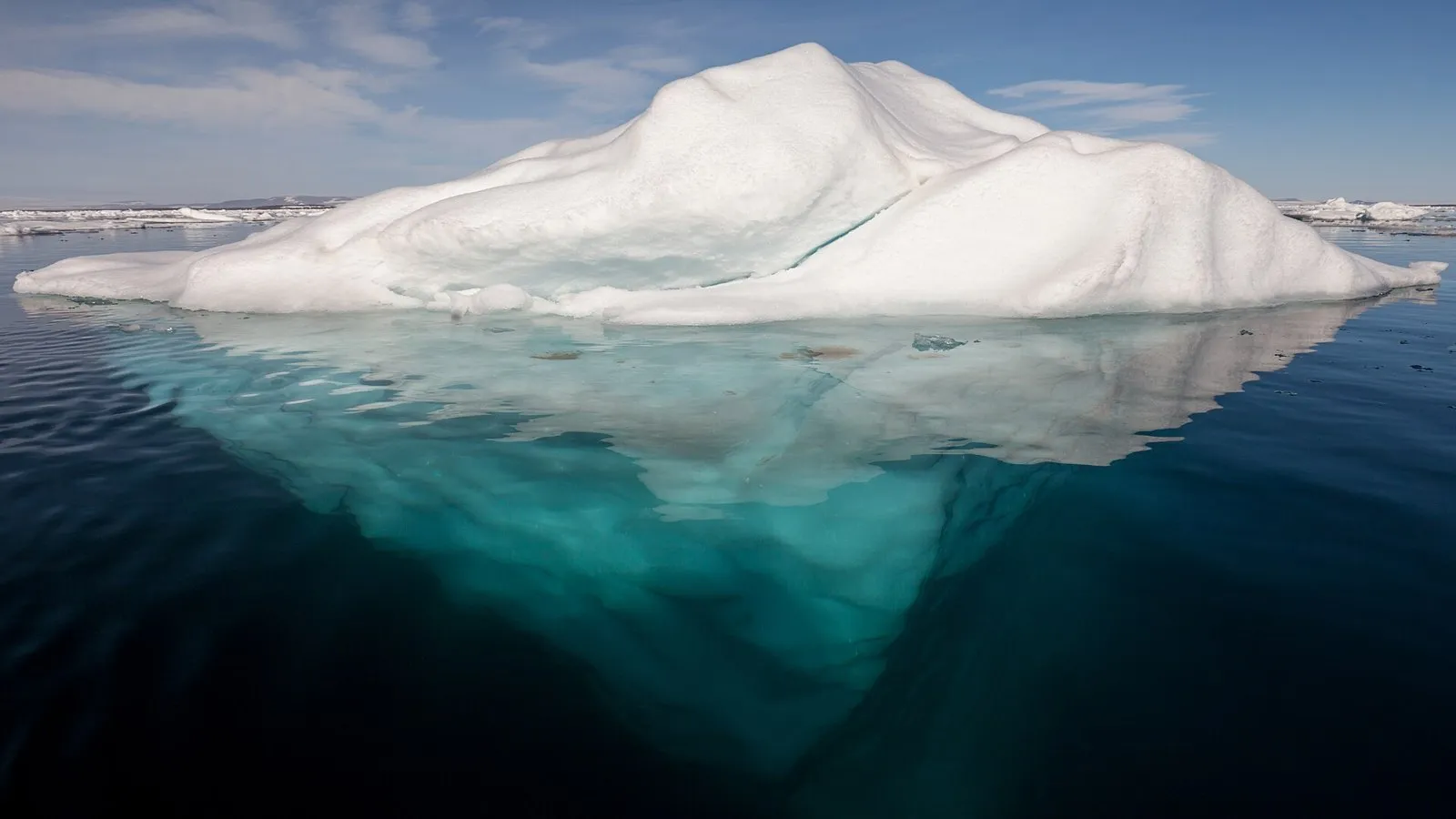
- Ice (0.92 g/cm³) floats on water (1.00 g/cm³); iron (7.9 g/cm³) sinks in water but floats on mercury (13.6 g/cm³).
4Exam focus
Key words: mass per unit volume; ρ = m/V; displacement; floats if less dense; liquids that do not mix.
Quick self-check
Answer in your head first, then reveal.
Mass per unit volume (1).
Volume 21 cm³ (1); 63 ÷ 21 = 3.0 g/cm³ (1).
Floats (1); its density is less than that of water (1.0 g/cm³) (1).
A – less dense (1).