Detailed · Deep study
1Reversible reactions
Most reactions go in one direction only. In a reversible reaction the products can also react to re-form the reactants. The symbol ⇌ is used in the equation. The reaction from left to right is the forward reaction; from right to left is the reverse reaction.
If the forward reaction is exothermic, the reverse reaction is endothermic by the same amount, and vice versa.
Hydrated and anhydrous salts
A hydrated salt contains water of crystallisation; an anhydrous salt has none. Heating a hydrated salt drives the water off (endothermic); adding water to the anhydrous salt reverses this (exothermic – it gets warm).
2Dynamic equilibrium (Supplement)
In a closed system (nothing can enter or leave), a reversible reaction reaches equilibrium. At the start the forward reaction is fast; as products build up, the reverse reaction speeds up, until both rates are the same.
- the rate of the forward reaction is equal to the rate of the reverse reaction
- the concentrations of reactants and products are no longer changing
The equilibrium is dynamic: both reactions are still happening, but at the same rate. The position of equilibrium describes the relative amounts of reactants and products – "to the right" means mostly products.
3Changing the position of equilibrium
When a condition is changed, the position of equilibrium moves so as to oppose the change.
| Change in condition | Position of equilibrium moves… | Example: N₂ + 3H₂ ⇌ 2NH₃ (forward reaction exothermic) |
|---|---|---|
| increase temperature | in the endothermic direction (to take in the added heat) | to the left – less ammonia |
| decrease temperature | in the exothermic direction | to the right – more ammonia |
| increase pressure (gases) | to the side with fewer moles of gas | to the right (4 mol gas → 2 mol gas) – more ammonia |
| decrease pressure | to the side with more moles of gas | to the left |
| increase concentration of a reactant | to the right, using up the added reactant | to the right |
| remove a product | to the right, replacing the product | to the right |
| add a catalyst | no change – equilibrium is reached faster | no change in yield |
Worked example
Predicting a shift
For , the forward reaction is exothermic. NO₂ is brown; N₂O₄ is colourless. Predict what happens to the colour when the mixture is (a) heated (b) compressed.
- 1
(a) Heating favours the endothermic direction, which is the reverse reaction.
equilibrium moves left → more NO₂ → mixture becomes darker brown
- 2
(b) Higher pressure favours fewer moles of gas: 2 mol on the left, 1 mol on the right.
equilibrium moves right → less NO₂ → mixture becomes paler
Answer(a) darker brown (b) paler
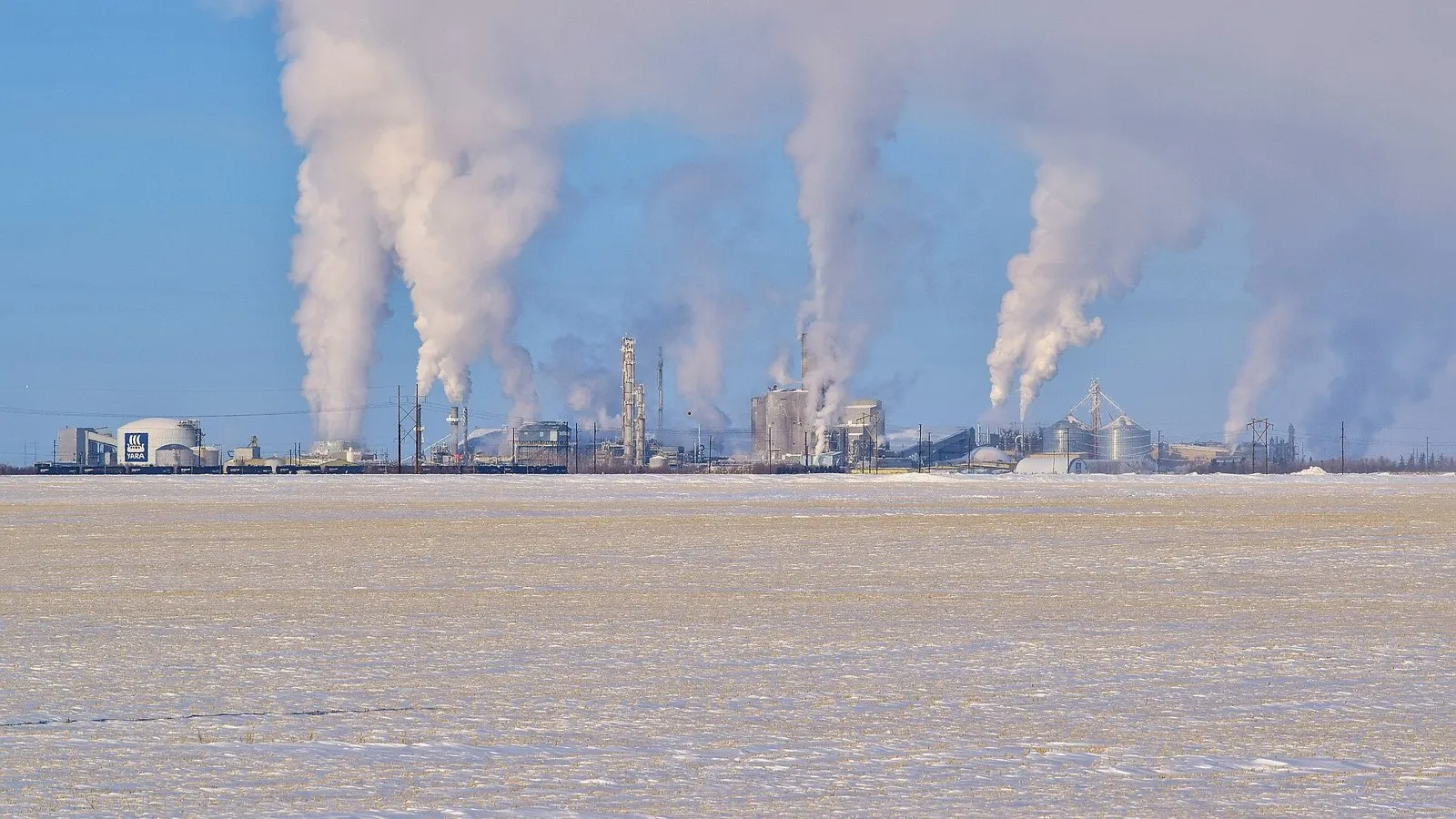
4The Haber and Contact processes
| Haber process (ammonia) | Contact process (sulfur trioxide) | |
|---|---|---|
| Equation | ||
| Forward reaction | exothermic | exothermic |
| Moles of gas | 4 → 2 | 3 → 2 |
| Sources | hydrogen from methane; nitrogen from air | sulfur dioxide from burning sulfur or roasting sulfide ores; oxygen from air |
| Temperature | 450 °C | 450 °C |
| Pressure | 20 000 kPa / 200 atm | 200 kPa / 2 atm |
| Catalyst | iron | vanadium(V) oxide |
| Product used for | fertilisers, nitric acid | making sulfuric acid |
Why these conditions?
| Condition | Effect on equilibrium position | Effect on rate | Compromise |
|---|---|---|---|
| temperature 450 °C | forward reaction is exothermic, so a low temperature would give a higher yield | a low temperature makes the rate too slow | 450 °C gives a reasonable yield at an acceptable rate; the catalyst also needs this temperature to work well |
| Haber pressure 200 atm | high pressure moves equilibrium to the right (fewer gas moles) – higher yield | high pressure also increases rate (more frequent collisions) | very high pressures are expensive (strong pipes, energy for compressors) and dangerous (risk of explosion), so 200 atm is a compromise |
| Contact pressure 2 atm | equilibrium already lies far to the right, giving a very high yield | – | higher pressure would add little yield but cost more and be less safe, so only slightly above atmospheric pressure is used |
| catalyst | no effect on position | increases the rate | equilibrium is reached faster, so more product per hour; the catalyst is not used up |
5Exam focus
Key words: ⇌; hydrated / anhydrous; closed system; rate of forward = rate of reverse; concentrations no longer change; position of equilibrium; opposes the change; fewer moles of gas; compromise; rate; yield; cost; safety.
Quick self-check
Answer in your head first, then reveal.
White (1) to blue (1).
The reaction is reversible (1).
Forward and reverse rates are equal (1); concentrations of reactants and products do not change (1).
Hydrogen from methane, nitrogen from air (1); 450 °C (1); 200 atm / 20 000 kPa (1); iron catalyst (1).
Lower temperature would give a higher yield because the forward reaction is exothermic (1); but the rate would be too slow (1); 450 °C is a compromise / the catalyst works (1).
No effect on yield / position of equilibrium (1); it increases the rate of forward and reverse reactions equally (1).