Detailed · Deep study
1Structure and reactivity
Alkanes (general formula CₙH₂ₙ₊₂) contain only single covalent bonds (C–C and C–H). They are saturated hydrocarbons. Because C–C and C–H bonds are strong and non-polar, alkanes are generally unreactive – they do not react with acids, alkalis or most other reagents.
| Alkane | Formula | State at r.t.p. |
|---|---|---|
| methane | CH₄ | gas |
| ethane | C₂H₆ | gas |
| propane | C₃H₈ | gas |
| butane | C₄H₁₀ | gas |
| pentane | C₅H₁₂ | liquid |
2Combustion
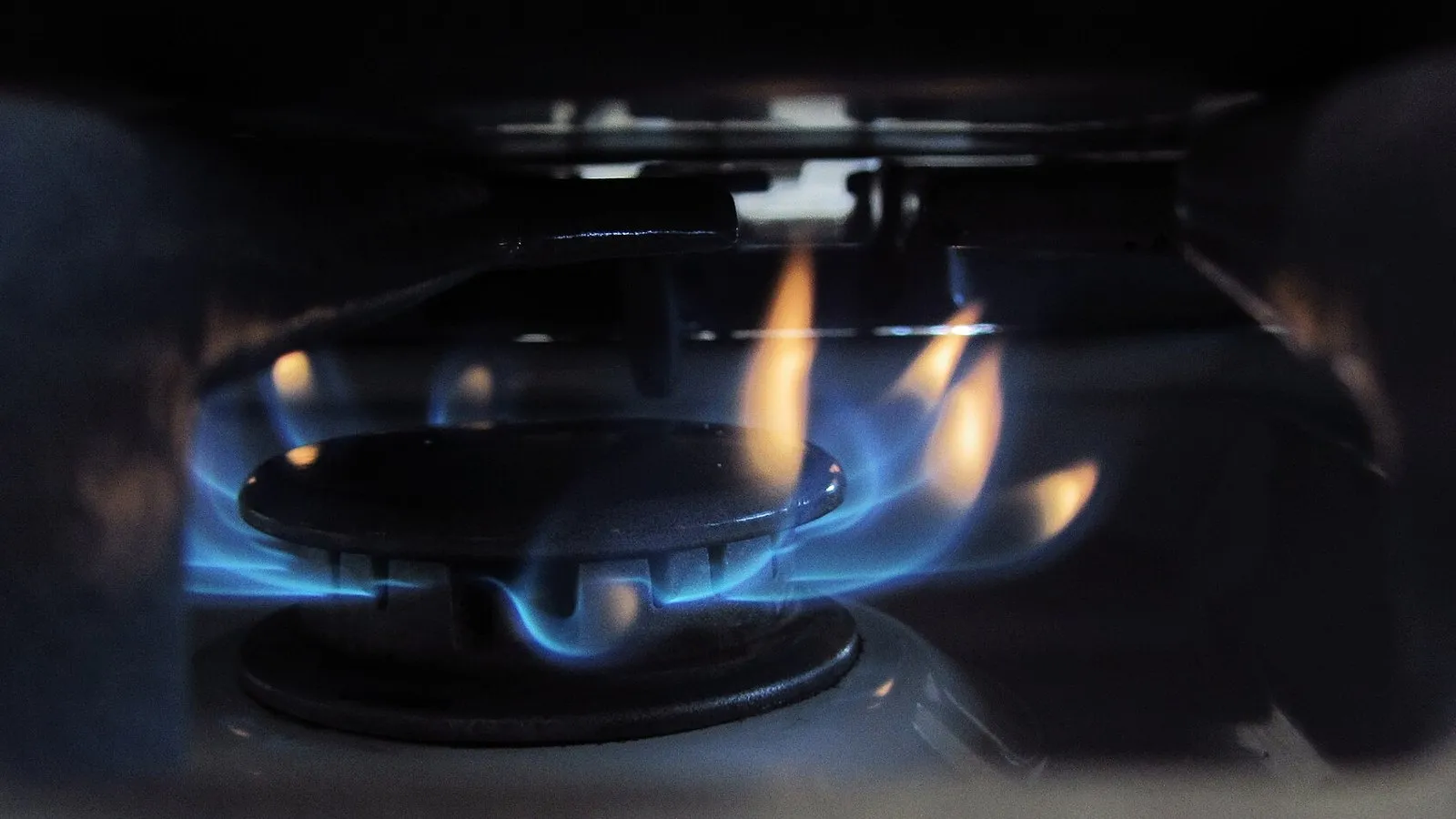
Alkanes are used as fuels because their combustion is very exothermic. In plenty of oxygen, complete combustion produces carbon dioxide and water; in limited oxygen, incomplete combustion also gives carbon monoxide and soot.
3Substitution with chlorine (Supplement)
a reaction in which one atom or group of atoms is replaced by another atom or group of atoms
Alkanes react with chlorine only in the presence of ultraviolet (UV) light – a photochemical reaction. The UV light provides the activation energy. One hydrogen atom is replaced by a chlorine atom (monosubstitution):
4Exam focus
Key words: single covalent bonds; saturated hydrocarbons; generally unreactive; combustion; substitution; ultraviolet light; photochemical; activation energy; chloromethane + hydrogen chloride.
Quick self-check
Answer in your head first, then reveal.
All carbon–carbon bonds are single bonds (1).
(2).
Ultraviolet light (1); provides the activation energy (1).
C₂H₅Cl with one Cl replacing an H, all bonds shown (2).