Detailed · Deep study
1Polymers and addition polymerisation
large molecules built up from many smaller molecules called monomers
In addition polymerisation, many alkene monomers join together: the C=C double bond in each monomer opens and the monomers link into a long chain. No other product is formed. Ethene forms poly(ethene) (polythene) at high pressure with a catalyst.
Deducing repeat units (Supplement)
To get the repeat unit from an alkene: draw the two C=C carbons with their other groups, change the double bond to a single bond, add a bond extending out of each side, and put brackets with an n. To go back, find the two-carbon repeat unit and put a double bond between those carbons.
| Monomer | Polymer | Repeat unit |
|---|---|---|
| ethene CH₂=CH₂ | poly(ethene) | –CH₂–CH₂– |
| propene CH₂=CHCH₃ | poly(propene) | –CH₂–CH(CH₃)– |
| chloroethene CH₂=CHCl | poly(chloroethene), PVC | –CH₂–CHCl– |
2Plastics and the environment
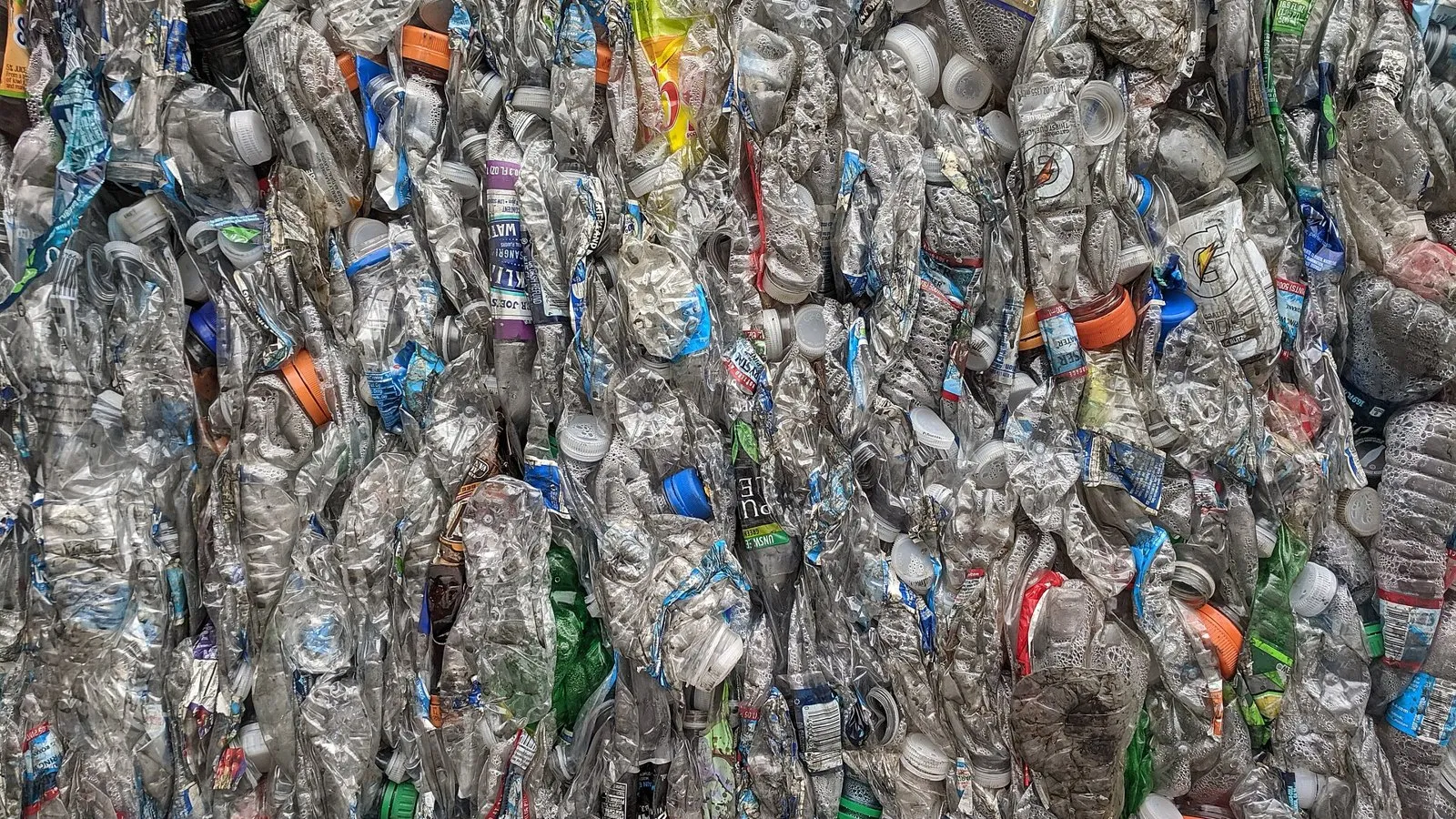
Plastics are made from polymers. They are useful because they are light, strong, waterproof and unreactive, but those same properties make disposal difficult: most are non-biodegradable – microorganisms cannot break them down.
| Challenge | Problem |
|---|---|
| disposal in landfill sites | plastics take up space and remain for hundreds of years; land is limited |
| accumulation in oceans | plastic waste collects in the sea; animals swallow it or become trapped; it breaks into microplastics |
| burning | produces toxic gases such as carbon monoxide, and hydrogen chloride from PVC; also carbon dioxide (greenhouse gas) |
Ways to reduce the problem include reusing and recycling plastics and developing biodegradable polymers.
3Condensation polymers (Supplement)
In condensation polymerisation, monomers with two functional groups join and a small molecule, usually water, is lost each time a link forms.
| Addition polymerisation | Condensation polymerisation | |
|---|---|---|
| Monomers | alkenes (C=C) | two different monomers, each with two functional groups |
| Products | polymer only | polymer and a small molecule (water) |
| Linkage | C–C backbone | amide (–CONH–) or ester (–COO–) links |
| Polymer | Monomers | Link |
|---|---|---|
| nylon (a polyamide) | a dicarboxylic acid + a diamine | amide, –CONH– |
| PET (a polyester) | a dicarboxylic acid + a diol | ester, –COO– |
| protein (natural polyamide) | amino acids | amide (peptide), –CONH– |
PET can be converted back into its monomers (by breaking the ester links) and then re-polymerised, so it can be recycled into new PET.
Proteins are natural polyamides formed from amino acid monomers, H₂N–CH(R)–COOH, where R is a different side-chain in each amino acid. The amine group of one amino acid joins to the acid group of the next, losing water.
4Exam focus
Key words: monomers; addition polymerisation; repeat unit; plastics; non-biodegradable; landfill; oceans; toxic gases; condensation – water lost; polyamide; polyester; amide / ester link; amino acids.
Quick self-check
Answer in your head first, then reveal.
Large molecule (1); built up from many smaller molecules / monomers (1).
Ethene (1); addition (1).
Any two: take up space / persist in landfill; accumulate in oceans harming marine life; toxic gases when burned (2).
–CH₂–CH(CH₃)– with extension bonds and brackets / n (2).
Condensation produces a small molecule / water as well, addition gives only the polymer (1); condensation uses monomers with two functional groups / two different monomers, addition uses alkenes (1).
Amide (1).