Detailed · Deep study
1How a fuel cell works
A fuel cell converts the chemical energy of a fuel directly into electrical energy. In a hydrogen–oxygen fuel cell, hydrogen is supplied to one electrode and oxygen (from air) to the other. The gases react without burning, and electrons flow through an external circuit to power a motor or lamp.
The cell keeps working as long as hydrogen and oxygen are supplied. Water is the only chemical product.
See Topic 5 · Chemical CalculationsThe reaction is exothermic: chemical energy is released (5.1).2Fuel cells versus petrol engines (Supplement)
A petrol engine burns hydrocarbons, producing carbon dioxide (a greenhouse gas), water, and pollutants such as carbon monoxide, oxides of nitrogen and soot.
| Advantages of fuel cells | Disadvantages of fuel cells |
|---|---|
| only product is water – no carbon dioxide, carbon monoxide, oxides of nitrogen or particulates from the vehicle | hydrogen is a gas that is hard to store: it needs large, heavy high-pressure tanks |
| more efficient – more of the chemical energy becomes useful energy | hydrogen is highly flammable and forms explosive mixtures with air |
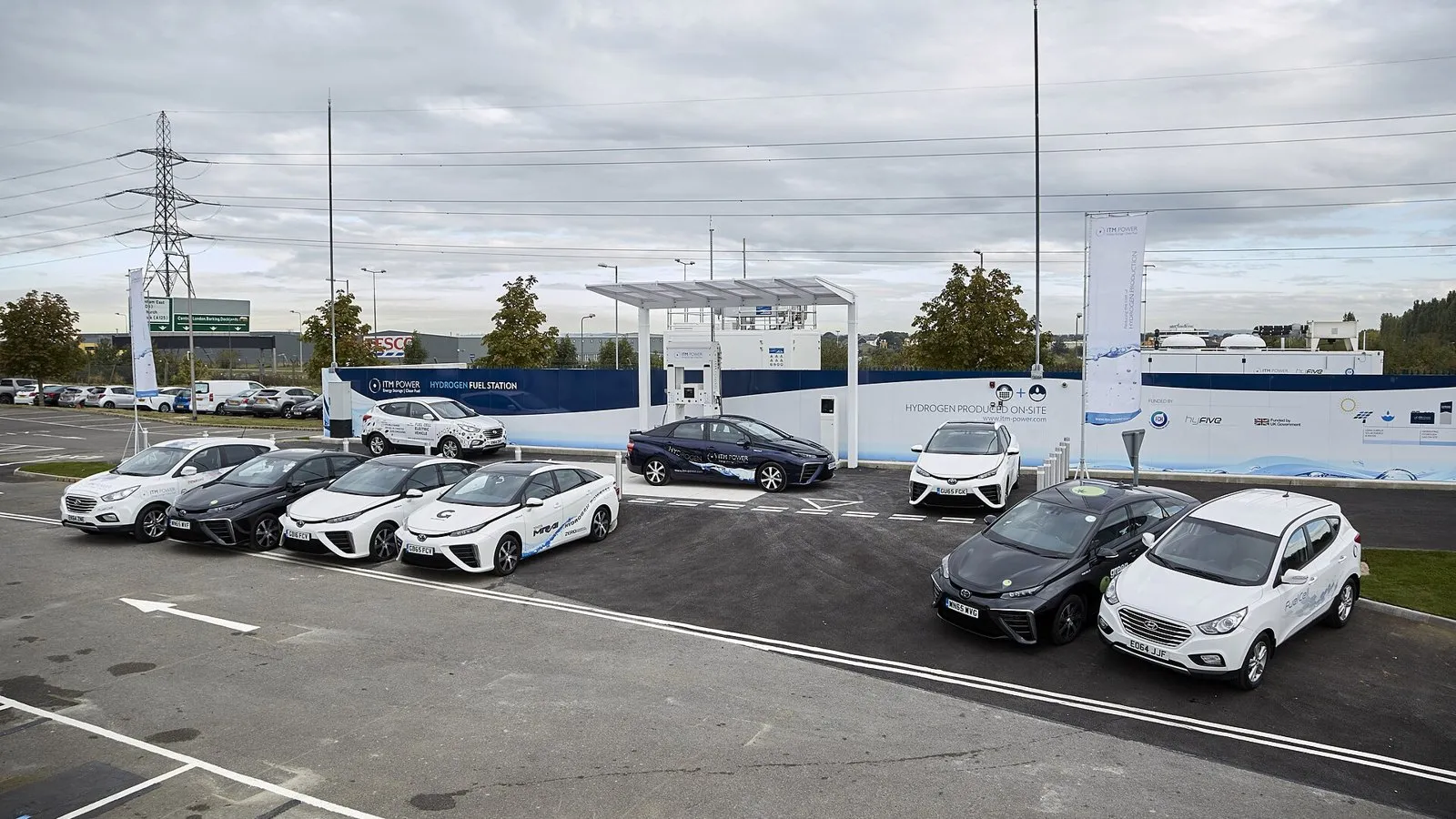
| no moving parts in the cell, so quieter and less maintenance | few hydrogen filling stations |
| hydrogen can be made from water using renewable electricity | most hydrogen is currently made from fossil fuels (methane), releasing carbon dioxide, or by electrolysis using electricity from fossil fuels |
| fuel cells are expensive (they use catalysts such as platinum) |
3Exam focus
Key words: hydrogen and oxygen; produce electricity; water is the only chemical product; no carbon dioxide at point of use; storage; flammable; made from fossil fuels.
Quick self-check
Answer in your head first, then reveal.
Electricity / electrical energy (1); water (only) (1).
(1).
Advantages, any two: only water produced / no CO₂, CO or NOx from the car; more efficient; quieter (2). Disadvantages, any two: hydrogen hard to store / needs high-pressure tanks; flammable / explosive; few refuelling stations; hydrogen often made from fossil fuels; cells expensive (2).