Detailed · Deep study
1Structure of blood vessels
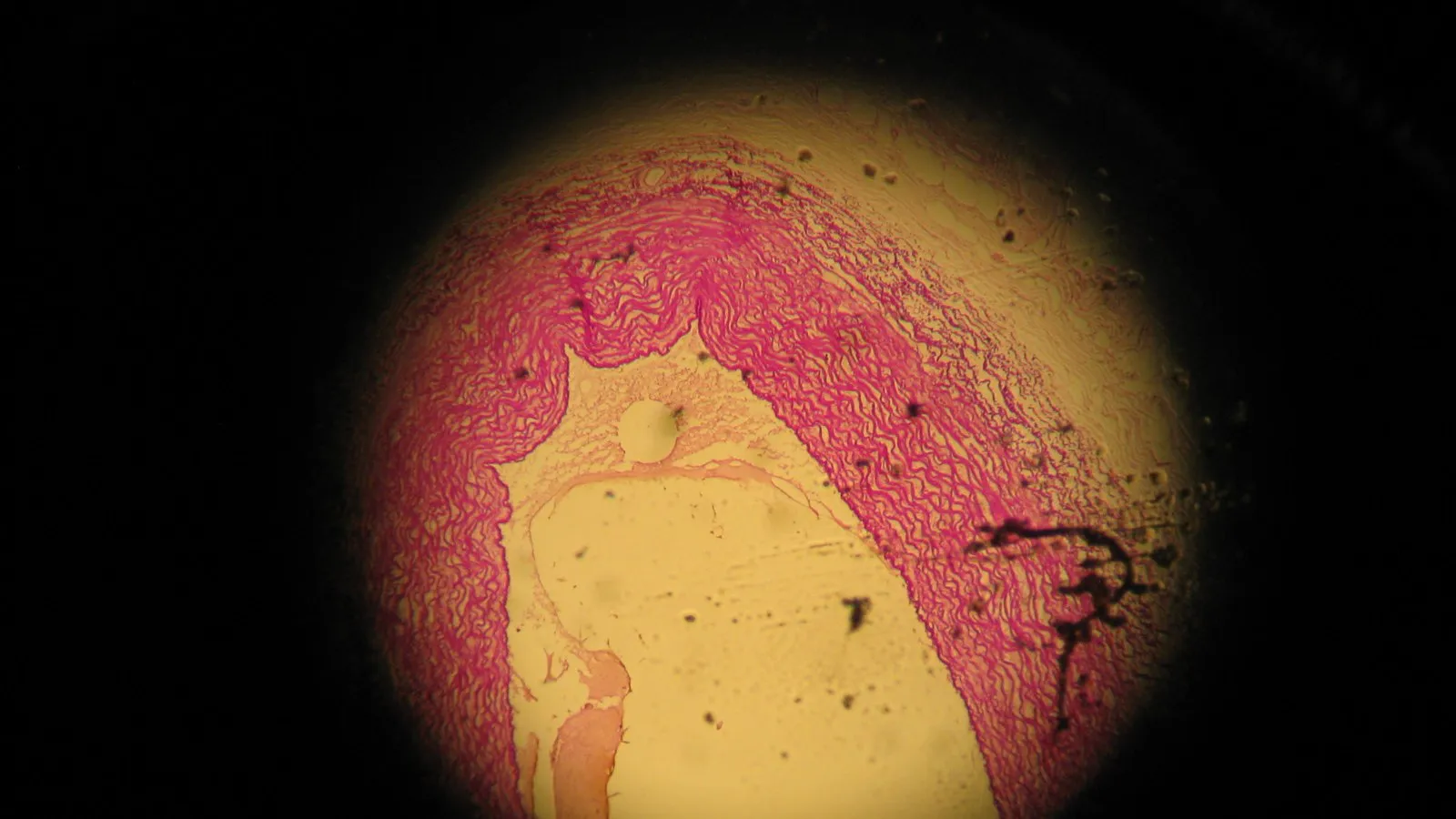
| Feature | Artery | Vein | Capillary |
|---|---|---|---|
| Relative thickness of wall | Thick: layers of muscle and elastic tissue | Thin: less muscle and elastic tissue | Very thin: only one cell thick |
| Diameter of the lumen | Narrow (small compared with the wall) | Wide | Very narrow: red blood cells pass in single file |
| Valves | None (except at the base of the aorta and pulmonary artery) | Present | None |
| Direction of blood | Away from the heart | Towards the heart | From arterioles to venules, through tissues |
Capillaries are the smallest vessels and reach almost every cell. Their functions are to allow exchange of substances between the blood and the tissues: oxygen, glucose and other nutrients diffuse out to cells, and carbon dioxide and other wastes diffuse into the blood.
2Structure related to function (Supplement)
| Vessel | Feature | Link to blood pressure or function |
|---|---|---|
| Artery | Thick, muscular wall | Withstands the high pressure of blood pumped from the ventricles without bursting |
| Artery | Elastic tissue in the wall | Stretches as each surge of blood arrives and recoils between beats, keeping the pressure high and the flow smooth |
| Artery | Narrow lumen | Helps maintain high pressure |
| Vein | Thin wall | Blood is at low pressure, so a thick wall is not needed |
| Vein | Wide lumen | Gives less resistance to flow, helping low-pressure blood return to the heart |
| Vein | Valves | Prevent backflow of low-pressure blood; contraction of nearby skeletal muscles squeezes veins and pushes blood towards the heart |
| Capillary | Wall one cell thick | Short diffusion distance for exchange of substances |
| Capillary | Narrow, many and branched | Large surface area for exchange; every cell is close to a capillary |
| Capillary | Leaky wall (small gaps) | Some plasma leaks out to form tissue fluid that bathes cells |
3The main blood vessels
| Organ | Blood vessels to it | Blood vessels from it |
|---|---|---|
| Heart | Vena cava (from the body), pulmonary vein (from the lungs) | Aorta (to the body), pulmonary artery (to the lungs) |
| Lungs | Pulmonary artery | Pulmonary vein |
| Kidney | Renal artery | Renal vein |
| Liver (Supplement) | Hepatic artery (oxygenated blood from the aorta) and hepatic portal vein (blood rich in absorbed nutrients from the intestines) | Hepatic veins (to the vena cava) |
4Exam focus
Practice questions
Quick self-check
Answer in your head first, then reveal.
Artery has a thicker wall; artery has a narrower lumen; veins have valves, arteries do not.
Exchange of substances between blood and cells; e.g. oxygen/glucose out and carbon dioxide/urea in; (allow forming tissue fluid).
Renal artery (to); renal vein (from).
Blood in veins is at low pressure; so the wall is thin (does not need to withstand high pressure); valves prevent backflow; wide lumen reduces resistance.
Wall one cell thick gives a short diffusion distance; many branched capillaries give a large surface area; close to every cell / leaky wall allows tissue fluid to form.
Hepatic portal vein.