Detailed · Deep study
1Catalysts and enzymes
a substance that increases the rate of a chemical reaction and is not changed by the reaction
proteins that are involved in all metabolic reactions, where they function as biological catalysts
Metabolism is all the chemical reactions in an organism. Every one of them is controlled by an enzyme. Because an enzyme is not used up, one enzyme molecule can catalyse the same reaction thousands of times.
| Enzyme | Substrate | Products | Where it works |
|---|---|---|---|
| Amylase | Starch | Simple sugars (maltose) | Mouth, small intestine |
| Protease (e.g. pepsin) | Proteins | Amino acids | Stomach, small intestine |
| Lipase | Fats and oils | Fatty acids and glycerol | Small intestine |
| Catalase | Hydrogen peroxide | Water and oxygen | Most cells, e.g. liver and potato |
2Why enzymes are important
Most chemical reactions in cells would happen extremely slowly at body temperature on their own: far too slowly to release energy, build new cells or digest food fast enough to stay alive. Heating the body enough to speed them up would damage it. Enzymes speed reactions up to the rate needed to sustain life, at normal body temperature.
3How enzymes work
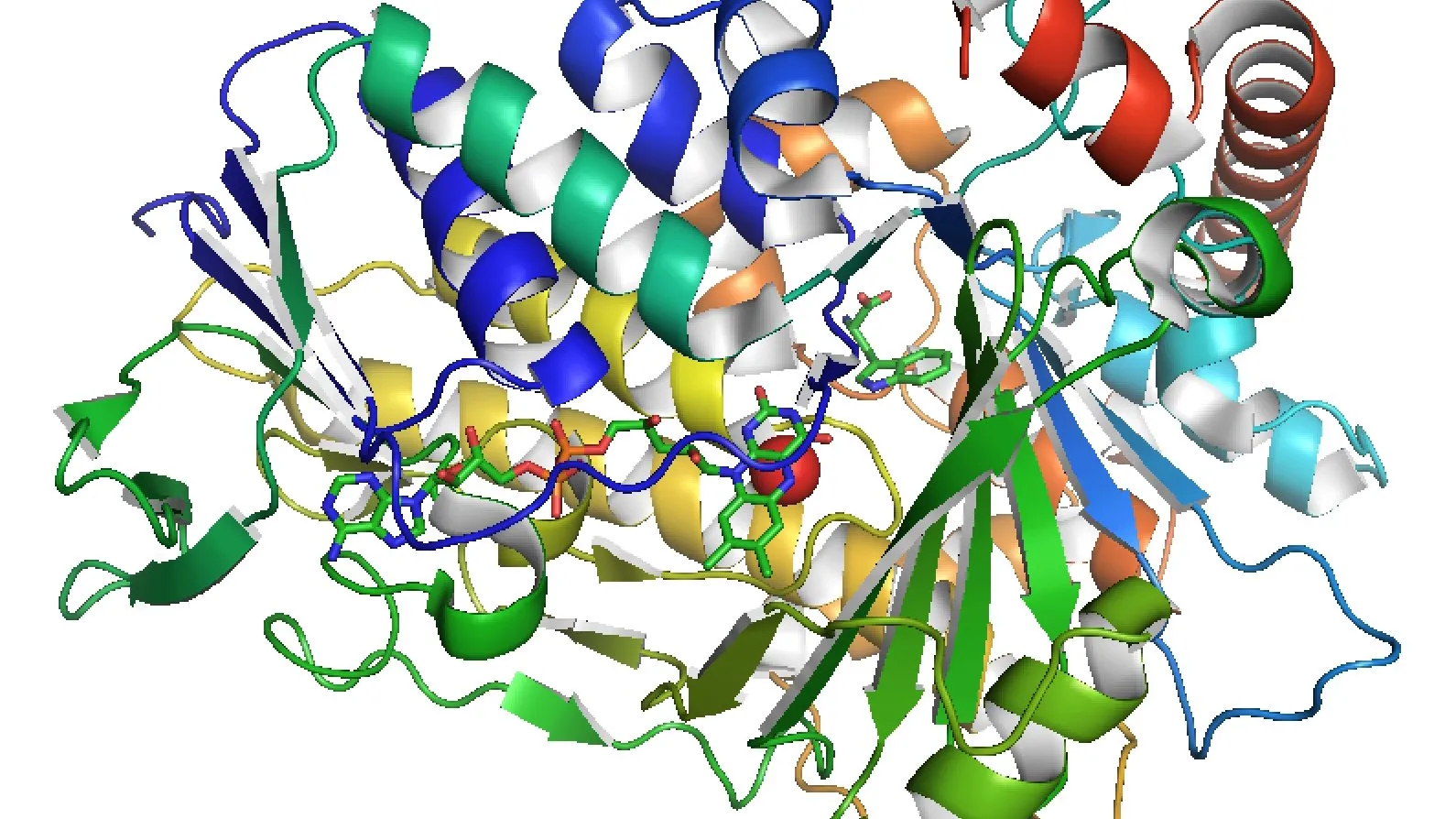
Each enzyme has a region called the active site. The molecule the enzyme acts on is the substrate. The shape of the active site is complementary to the shape of its substrate: they fit together, like a key in a lock. The reaction happens while the substrate is in the active site, and the products are then released.
The enzyme-substrate complex (Supplement)
- The substrate collides with the enzyme and fits into the active site.
- An enzyme-substrate complex forms.
- The reaction takes place, and the substrate is converted into products.
- The products leave the active site. The enzyme is unchanged and can bind another substrate molecule.
Specificity (Supplement)
Each enzyme is specific: it catalyses only one reaction, or one type of reaction. Only a substrate whose shape is complementary to the active site can fit it and form an enzyme-substrate complex. This is why amylase digests starch but not protein.
4Effect of temperature
- As temperature rises towards the optimum, the rate increases.
- The optimum temperature is where the enzyme works fastest: about 37 °C for most human enzymes.
- Above the optimum, the rate falls quickly as the enzyme is denatured: its active site changes shape. Denaturation is permanent.
- At low temperatures the rate is slow, but the enzyme is not denatured. It works again if warmed.
Explaining the temperature curve (Supplement)
| Temperature | Explanation |
|---|---|
| Rising to the optimum | Enzyme and substrate molecules gain kinetic energy and move faster, so there are more frequent effective collisions and more enzyme-substrate complexes form per second |
| At the optimum | The highest frequency of effective collisions while the active site still keeps its shape |
| Above the optimum | Bonds holding the enzyme in shape break; the active site changes shape, the substrate no longer fits, and the enzyme is denatured. Fewer enzyme-substrate complexes form |
5Effect of pH
Each enzyme works best at its optimum pH. Pepsin, which digests protein in the acidic stomach, works best at about pH 2. Amylase in the mouth works best at about pH 7. If the pH is too far from the optimum, the enzyme is denatured.
6Investigating enzyme activity
Practical
Effect of temperature on amylase activity
Aim. To find how temperature affects the rate at which amylase digests starch.
Method
- Put a drop of iodine solution in each well of a spotting tile.
- Place separate tubes of starch solution and amylase solution in a water bath at the chosen temperature (e.g. 20 °C) for 5 minutes so they reach that temperature.
- Mix the amylase and starch and start a stopwatch.
- Every minute, take a drop of the mixture and add it to a fresh well of iodine.
- Record the time when the iodine stays orange-brown (all starch digested).
- Repeat at other temperatures, e.g. 30, 40, 50 and 60 °C.
| independent variable | Temperature |
|---|---|
| dependent variable | Time taken for the starch to be digested (iodine stays orange-brown) |
| controlled variable | Volumes and concentrations of starch and amylase, pH, time between samples |
Results. The starch disappears fastest near the optimum temperature (about 40 °C in the example). At high temperatures the iodine stays blue-black because the amylase is denatured.
Safety. Wear eye protection; take care with hot water baths.
7Exam focus
Key words that earn the marks
- biological catalyst; protein; not changed by the reaction.
- active site; complementary shape; substrate; products.
- optimum temperature / pH; denatured (never 'killed').
- (Supplement) enzyme-substrate complex; specific; kinetic energy; frequency of effective collisions; shape and fit.
Practice questions
Quick self-check
Answer in your head first, then reveal.
A substance that increases the rate of a chemical reaction; and is not changed by the reaction.
They speed up metabolic reactions; to a rate fast enough to sustain life (at body temperature).
The substrate fits into the active site; the active site has a complementary shape; the substrate is converted to products which are released (enzyme unchanged).
Activity increases up to the optimum (about 37 °C); then decreases rapidly; the enzyme is denatured at high temperatures / no activity by about 60–70 °C.
Molecules gain kinetic energy; move faster; more frequent effective collisions between enzyme and substrate; more enzyme-substrate complexes form.
pH is far from pepsin's optimum (about 2); the shape of the active site changes; substrate no longer fits / fewer enzyme-substrate complexes; pepsin is denatured.