Detailed · Deep study
1What a circulatory system is
a system of blood vessels with a pump and valves to ensure one-way flow of blood
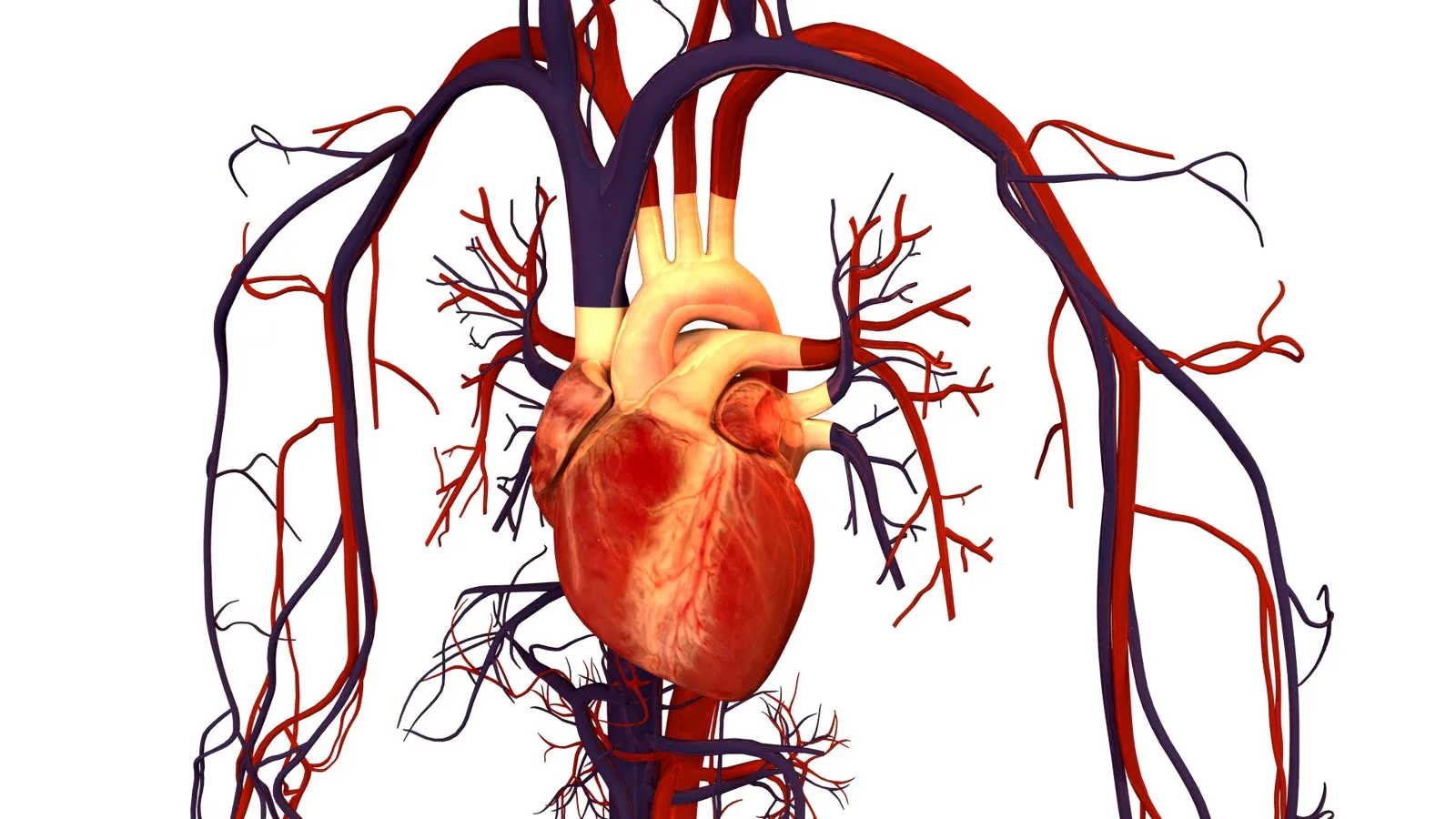
Large animals cannot rely on diffusion alone to supply every cell, because many cells are far from the surface. A circulatory system carries blood to all parts of the body, delivering oxygen and nutrients and removing waste such as carbon dioxide.
| Part | Role |
|---|---|
| Heart | A muscular pump that pushes blood around the body |
| Blood vessels | Arteries carry blood away from the heart, veins return it, and capillaries exchange substances with cells |
| Valves | Stop blood flowing backwards, so it moves in one direction only |
2Single and double circulation (Supplement)
| Fish (single circulation) | Mammal (double circulation) | |
|---|---|---|
| Route | Heart → gills → body organs → heart | Heart → lungs → heart → body organs → heart |
| Passes through the heart | Once per circuit | Twice per circuit |
| Heart | One side, pumping deoxygenated blood | Two sides separated by a septum: the right side pumps deoxygenated blood to the lungs; the left side pumps oxygenated blood to the body |
| Pressure to the body | Low: pressure is lost in the gill capillaries | High: blood is pumped again after the lungs |
In the mammal, the route between the heart and the lungs is the pulmonary circulation and the route between the heart and the rest of the body is the systemic circulation.
3Advantages of a double circulation (Supplement)
- Blood returns to the heart after the lungs and is pumped again, so it reaches the body organs at a high pressure and flows quickly.
- Oxygen and glucose are delivered to respiring cells faster, which suits active animals that keep a constant body temperature.
- Blood going to the lungs can be at a lower pressure, which avoids damage to the delicate lung capillaries.
- Oxygenated and deoxygenated blood are kept separate, so the blood going to the body is fully oxygenated.
4Exam focus
Practice questions
Quick self-check
Answer in your head first, then reveal.
A system of blood vessels with a pump (the heart); and valves to ensure one-way flow of blood.
Blood is pumped from the heart to the gills, then to the body organs and back to the heart; it passes through the heart once per circuit.
The right side of the heart pumps blood to the lungs; oxygenated blood returns to the left side of the heart; which pumps it to the body organs before it returns to the right side (twice through the heart per circuit).
Blood is pumped again after the lungs so it reaches the body at high pressure; oxygen is delivered faster to respiring cells.