Detailed · Deep study
1What blood is made of
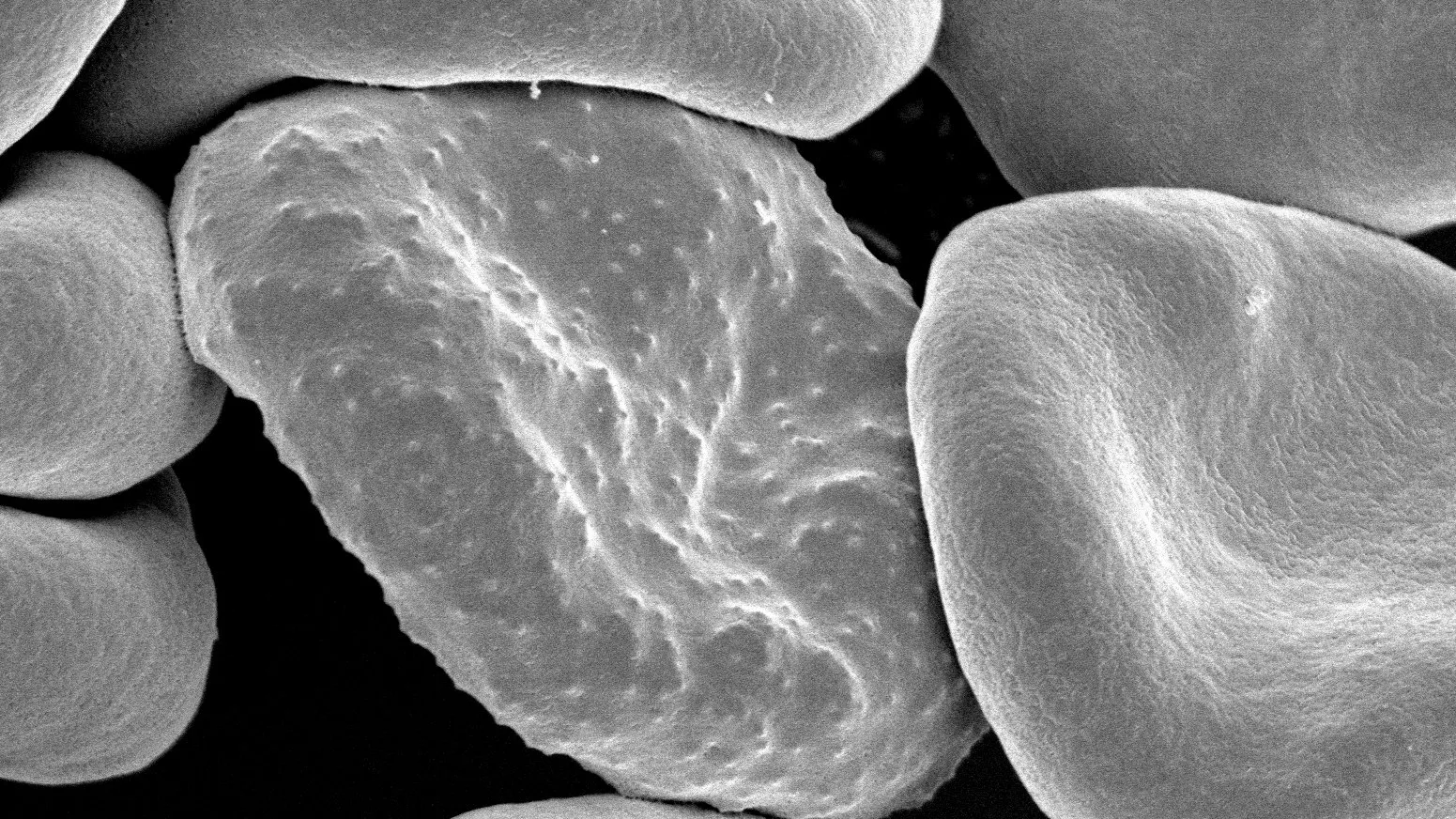
Blood is made of red blood cells, white blood cells and platelets carried in a pale yellow liquid, plasma. Plasma is mostly water.
| Component | How to identify it | Function |
|---|---|---|
| Red blood cell | Many; small biconcave discs, paler in the centre; no nucleus | Transports oxygen. It is packed with haemoglobin, a red protein containing iron, which combines with oxygen in the lungs and releases it in the tissues |
| White blood cell | Fewer; larger; has a nucleus; no haemoglobin | Defends the body: phagocytosis and antibody production |
| Platelet | Tiny fragments of cells | Involved in clotting |
| Plasma | The liquid part | Transports blood cells, ions, nutrients (e.g. glucose, amino acids), urea, hormones and carbon dioxide |
2White blood cells (Supplement)
| Cell | How to identify it | Function |
|---|---|---|
| Phagocyte | Large cell with a lobed nucleus and granular cytoplasm | Engulfs pathogens by phagocytosis and digests them |
| Lymphocyte | Smaller; a large round nucleus filling most of the cell, little cytoplasm | Produces antibodies |
3Blood clotting
When a blood vessel is damaged, platelets at the wound start the clotting process. A clot forms and plugs the wound. The roles of clotting are to prevent blood loss and to prevent the entry of pathogens through the wound.
4The clotting process (Supplement)
- Platelets at the damaged vessel release substances that start a chain of reactions.
- The soluble plasma protein fibrinogen is converted into insoluble fibrin.
- Fibrin forms long threads that make a mesh across the wound.
- Red blood cells and platelets are trapped in the mesh, forming a clot, which dries to a scab.
5Exam focus
Practice questions
Quick self-check
Answer in your head first, then reveal.
Combines with / transports oxygen.
Any three of: blood cells, ions, nutrients (glucose, amino acids), urea, hormones, carbon dioxide.
Red blood cell has no nucleus; contains haemoglobin; is smaller; biconcave shape (white blood cells have a nucleus).
Prevents blood loss; prevents entry of pathogens.
Lymphocytes produce antibodies; phagocytes engulf pathogens by phagocytosis.
Fibrinogen; is converted to fibrin; forms a mesh (that traps blood cells).