Detailed · Deep study
1Chromosomes, genes and alleles
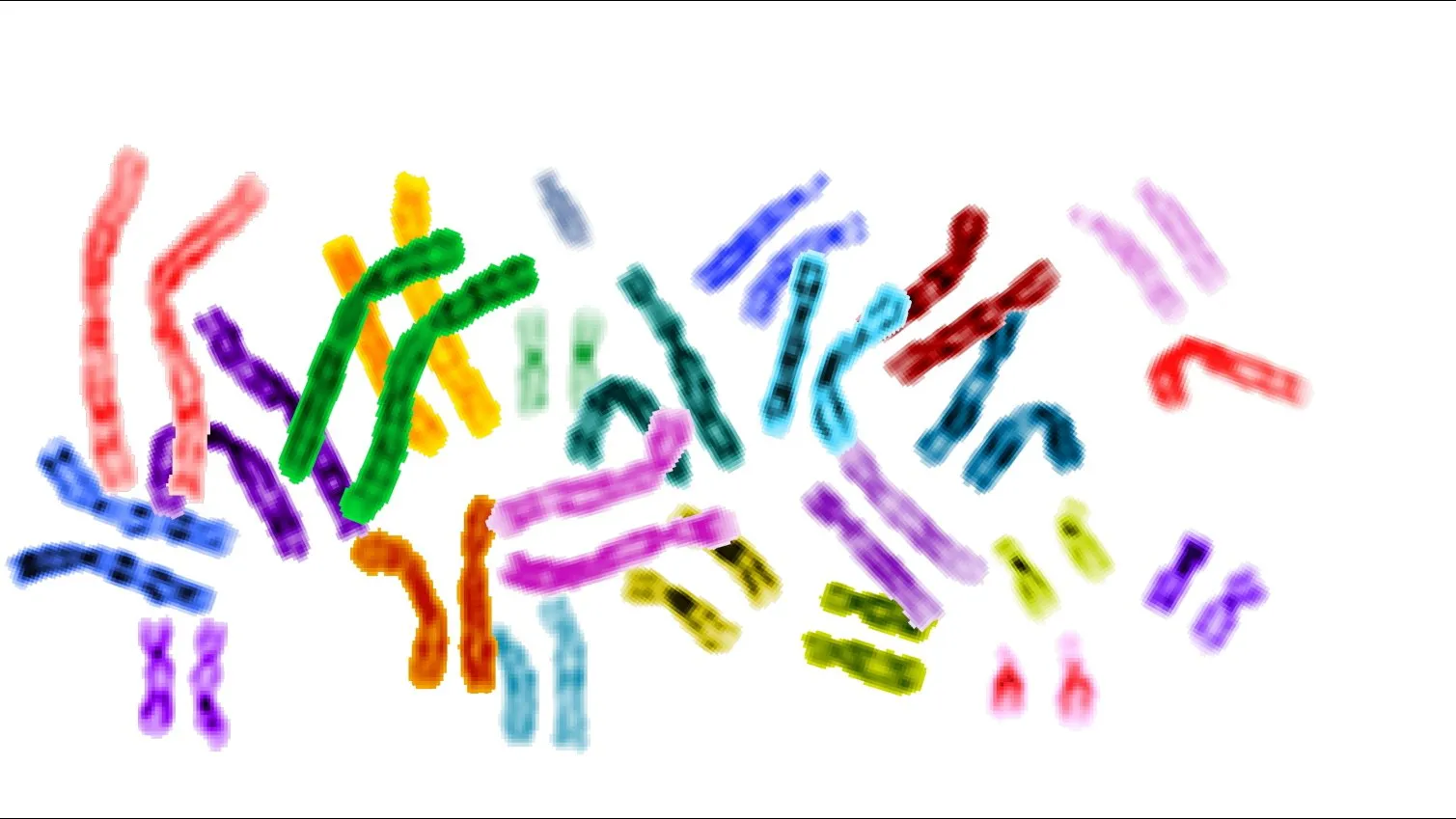
Chromosomes are made of DNA, which contains genetic information in the form of genes. Each chromosome carries many genes along its length.
a length of DNA that codes for a protein
an alternative form of a gene
For example, the gene for a pea plant's height has two alleles: one for tall and one for dwarf. Different alleles give different versions of a feature.
2Inheritance of sex
Humans have one pair of sex chromosomes. Females have two X chromosomes (XX); males have one X and one Y (XY). All eggs carry an X chromosome; half of the sperm carry an X and half a Y. So whether a baby is a boy or a girl depends on the sperm that fertilises the egg, and the chance of each is 50% (a 1 : 1 ratio).
3Genes and proteins (Supplement)
- The sequence of bases in a gene determines the sequence of amino acids used to make a specific protein.
- Different sequences of amino acids give different shapes to protein molecules, so each protein can do a particular job.
- DNA controls cell function by controlling the production of proteins, including enzymes, membrane carriers and receptors for neurotransmitters.
- The gene coding for the protein remains in the nucleus.
- Messenger RNA (mRNA) is made in the nucleus as a copy of the gene.
- The mRNA molecules move to the cytoplasm.
- The mRNA passes through ribosomes.
- The ribosome assembles amino acids into protein molecules.
- The specific sequence of amino acids is determined by the sequence of bases in the mRNA.
Gene expression: most body cells in an organism contain the same genes, but many genes in a particular cell are not expressed, because each cell only makes the specific proteins it needs. For example, only red blood cell precursors make haemoglobin, although all cells carry the haemoglobin gene.
See Topic 4 · Biological MoleculesDNA structure and proteins are covered in Topic 4 Biological molecules.4Haploid and diploid nuclei (Supplement)
a nucleus containing a single set of chromosomes
a nucleus containing two sets of chromosomes
In a diploid cell there is a pair of each type of chromosome, one from each parent. A human diploid cell has 23 pairs (46 chromosomes). Human gametes are haploid, with 23 chromosomes.
See Topic 16 · ReproductionGametes and zygotes are covered in 16.2 Sexual reproduction.5Exam focus
Practice questions
Quick self-check
Answer in your head first, then reveal.
A length of DNA that codes for a protein.
Parents XX and XY; gametes X, X and X, Y; offspring XX, XX, XY, XY; ratio 1 girl : 1 boy.
The sequence of bases in the gene; determines the sequence of amino acids; which determines the shape of the protein.
mRNA copy of the gene made in the nucleus; mRNA moves to the cytoplasm; passes through a ribosome; ribosome assembles amino acids in the order set by the mRNA bases.
Many genes are not expressed; each cell only makes the proteins it needs.