Detailed · Deep study
1What hormones are
a chemical substance, produced by a gland and carried by the blood, which alters the activity of one or more specific target organs
Glands that secrete hormones directly into the blood are called endocrine glands. A hormone travels all round the body in the plasma but only affects its target organs.
| Endocrine gland | Hormone secreted |
|---|---|
| Adrenal glands (on top of the kidneys) | Adrenaline |
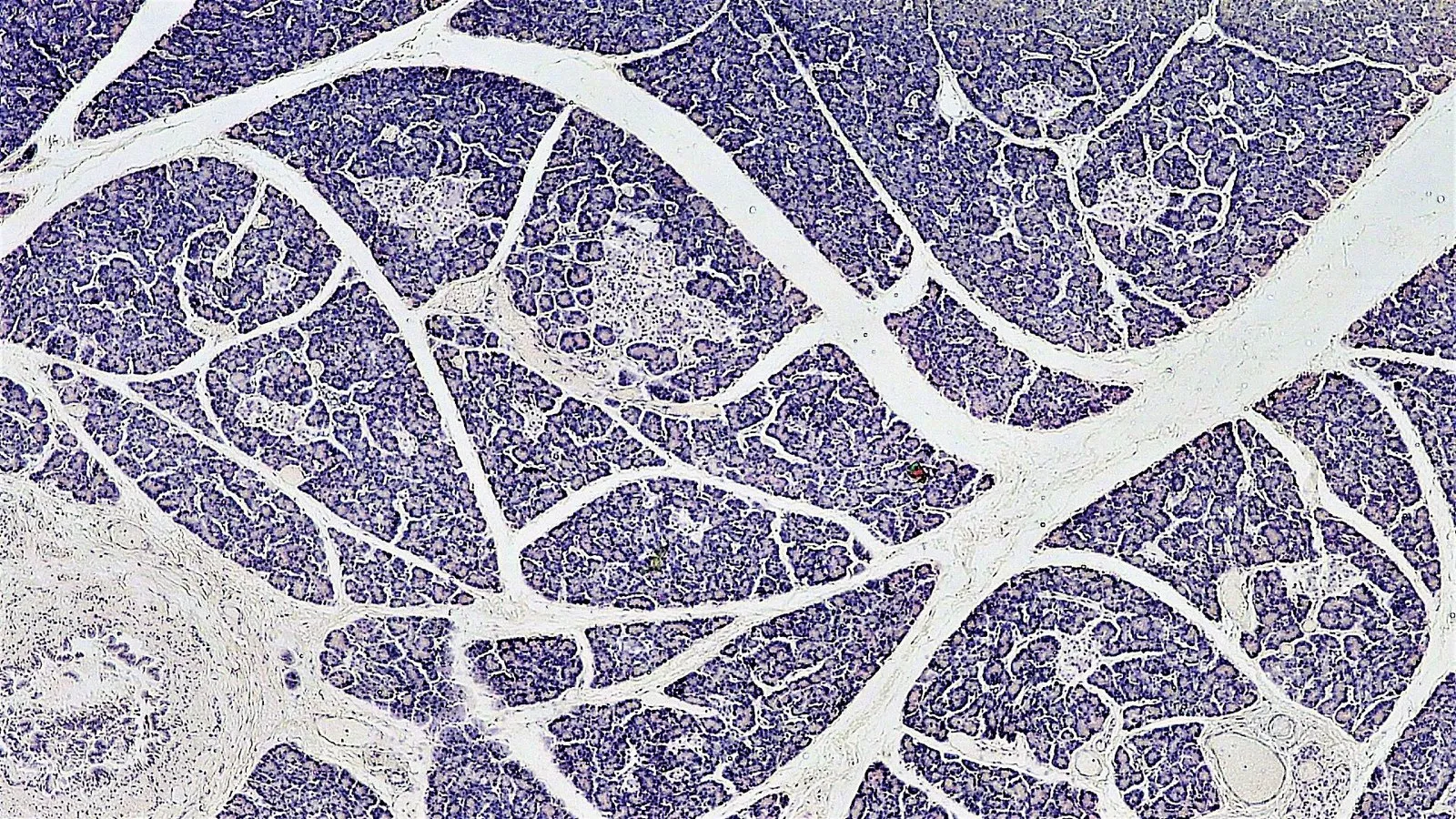
| Pancreas | Insulin; also glucagon (Supplement) |
| Testes | Testosterone |
| Ovaries | Oestrogen |
2Adrenaline
Adrenaline is the hormone secreted in 'fight or flight' situations, such as danger, fear or excitement. It prepares the body for action.
| Effect | Why it helps |
|---|---|
| Increased breathing rate | More oxygen taken in for respiration |
| Increased heart rate | Oxygen and glucose delivered to muscles faster |
| Increased pupil diameter | More light enters the eye, improving vision |
3Nervous and hormonal control compared
| Feature | Nervous control | Hormonal control |
|---|---|---|
| Speed of action | Very fast (impulses) | Slower (hormones travel in the blood) |
| Duration of effect | Short-lived | Longer lasting |
| How the message travels | Electrical impulses along neurones | Chemicals carried in the blood |
| Area affected | Precise (specific effectors) | Can affect several target organs |
4Exam focus
Practice questions
Quick self-check
Answer in your head first, then reveal.
A chemical substance produced by a gland; carried by the blood; alters the activity of specific target organs.
Testosterone (testes); oestrogen (ovaries).
Nervous is faster; hormonal effects last longer.
Insulin; glucagon.
Increases blood glucose concentration; increases heart rate; so more glucose and oxygen reach muscles for respiration / more energy released.