Detailed · Deep study
1Hardware
hardware
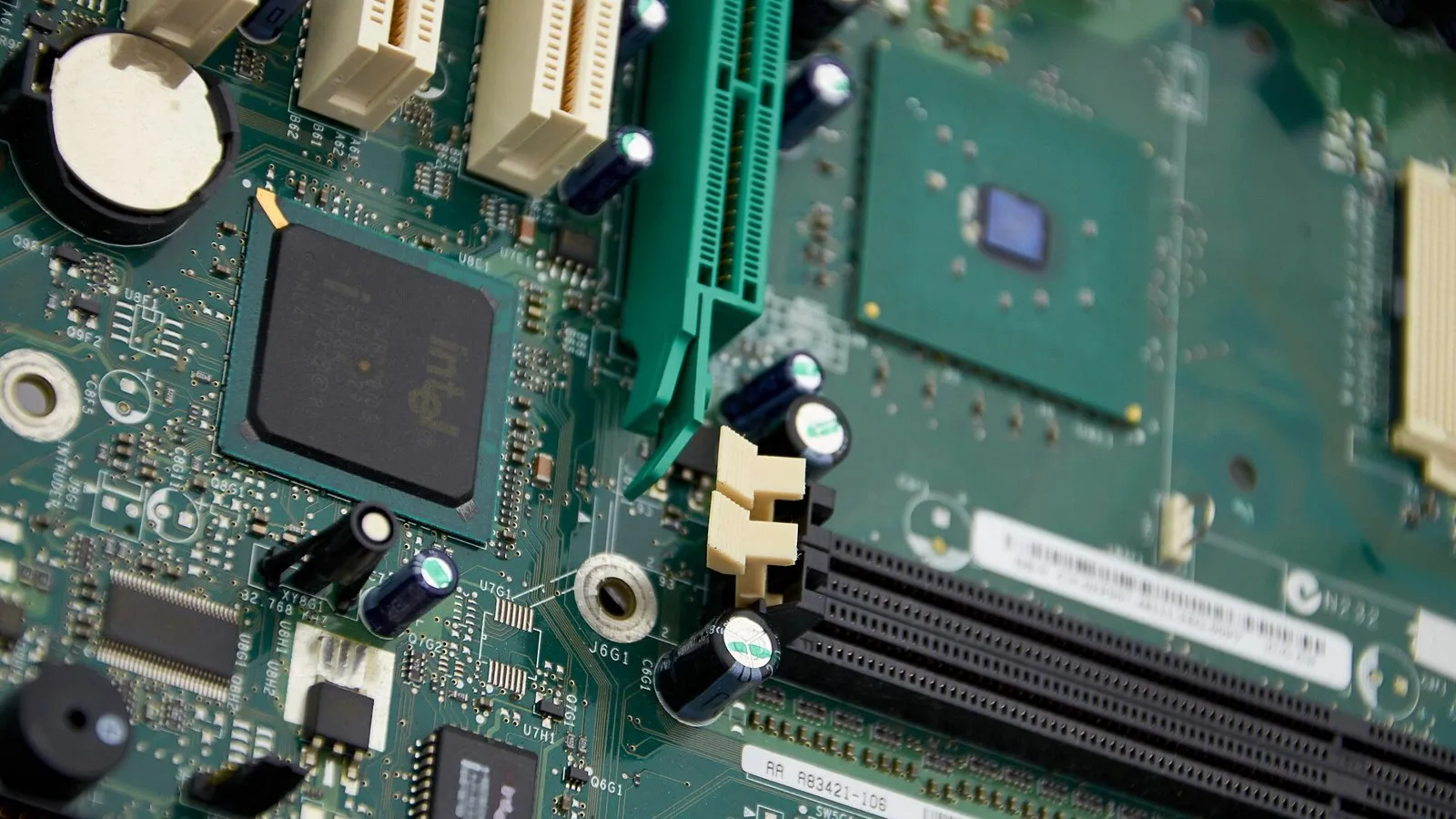
The physical components of a computer system.
| Component | Role |
|---|---|
| central processing unit (CPU) / processor | carries out the instructions of programs and processes data |
| motherboard | the main circuit board; connects the CPU, memory and other components so they can communicate |
| RAM and ROM | internal memory (see 1.2) |
| graphics card | processes image data and sends it to the monitor; allows high-quality graphics (e.g. for games, video editing) |
| sound card | converts digital sound data to analogue signals for speakers, and analogue input from a microphone to digital |
| network interface card (NIC) | lets the computer connect to a network |
| camera | built-in webcam for video calls |
| internal/external storage devices | store data and programs permanently, e.g. hard disk, SSD |
| input and output devices | let data in and results out (see topic 2) |
2Software
software
Programs for controlling the operation of a computer or processing of electronic data.
| Applications software | Used for |
|---|---|
| word processing | creating and editing letters, reports and other text documents |
| spreadsheet | calculations, models and graphs using formulae in cells |
| database management system | storing, searching and sorting large amounts of structured data |
| control and measurement | controlling devices (e.g. traffic lights) and logging data from sensors |
| apps and applets | apps: small programs for phones/tablets; applets: small programs that run inside another program, e.g. a web browser |
| video, graphics and audio editing | editing films, photos/drawings and sound recordings |
| computer aided design (CAD) | designing products, buildings and circuits in 2D or 3D |
| System software | Purpose |
|---|---|
| compiler | translates a high-level language program into machine code all at once |
| linker | combines separately compiled modules (object files) into one program |
| device driver | lets the operating system communicate with a hardware device, e.g. a printer |
| operating system | manages the hardware and runs applications (see 1.3) |
| utilities | help to maintain the computer, e.g. anti-virus, backup, file compression, disk defragmenter |
3Analogue and digital data
| Analogue data | Digital data | |
|---|---|---|
| values | continuously variable – any value in a range | discrete values, stored as binary (0s and 1s) |
| examples | temperature, sound waves, light levels in the real world | data stored and processed by a computer |
| processing | cannot be processed directly by a computer | can be processed, stored and transmitted by a computer |
- Analogue to digital: data from a sensor or microphone must be converted by an analogue-to-digital converter (ADC) so that it can be processed by a computer.
- Digital to analogue: the computer's output must be converted by a digital-to-analogue converter (DAC) so it can be used to control devices, e.g. a motor or a speaker.
4Exam focus
Key words: hardware; software; CPU; motherboard; graphics card; sound card; NIC; applications software; system software; compiler; linker; device driver; utility; analogue; digital; ADC; DAC.
Quick self-check
Answer in your head first, then reveal.
Any two: compiler; linker; device driver; operating system; utility (2).
Sensor data is analogue (1); the computer can only process digital data, so an ADC converts it (1).
Applications software lets the user carry out a task (1); system software lets the computer operate / manages the hardware (1).